
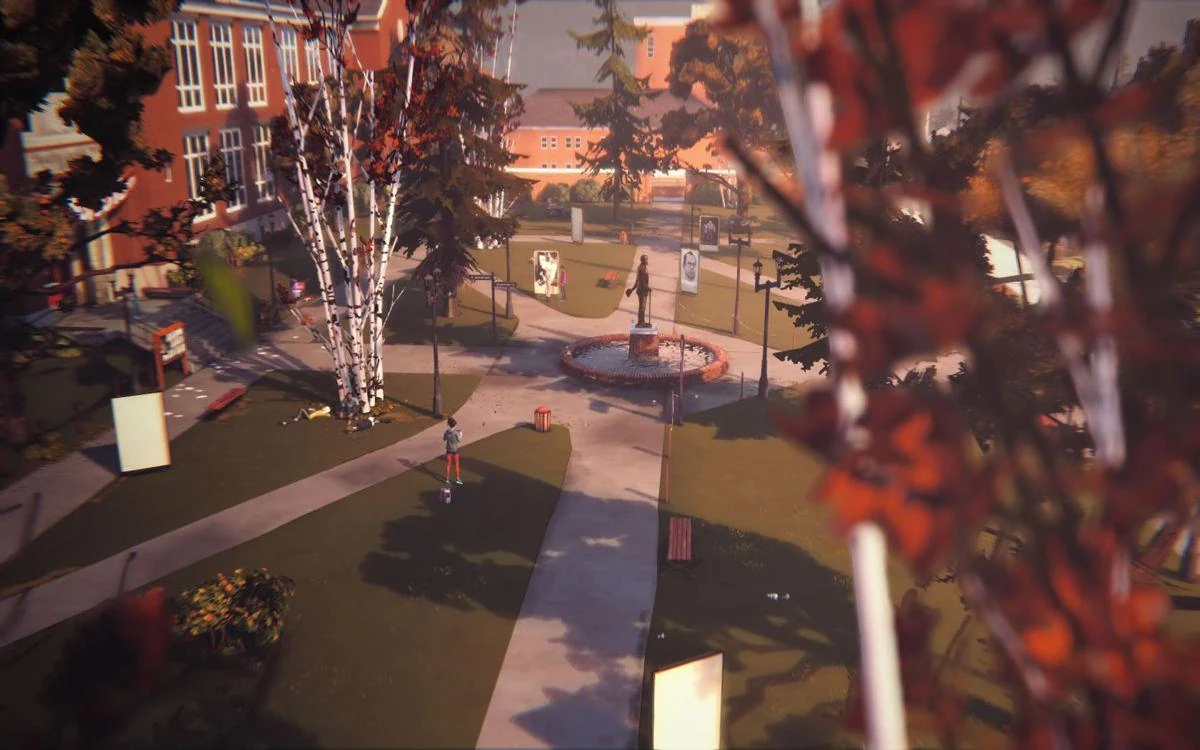
There are places we remember even though we have never been there.
A street in a film, a town in a novel, a landscape in a video game. We know perfectly well that these places are fictional, yet somehow they become part of our memories. Sometimes, we even find ourselves longing to return.
And sometimes, all it takes is a song.
For anyone who has played Life Is Strange, the opening notes of Syd Matters' To All of You may be enough to bring back Arcadia Bay. Not necessarily the game's story, or even its characters, but something less tangible: the autumn light, the quiet streets, the peculiar melancholy of a small town somewhere on the Oregon coast.
A place that never existed, yet one that can feel strangely familiar.
There is something remarkable about that. We can miss a place we have never visited, inhabited by people who never lived, recalling experiences that never actually happened to us.
And the feeling can be surprisingly powerful.
Perhaps it is partly the music. Life Is Strange has a soundtrack that seems inseparable from its world. The acoustic guitars, subdued vocals, and occasional moments of silence create an atmosphere that persists long after the game has ended. Years later, a familiar melody can bring back the sensation of walking through Blackwell Academy or watching the sun descend over Arcadia Bay.
We might remember the first time we played it. The room we were in, the time of day, perhaps even what was happening in our lives.
But we also remember something that was never ours in the first place.
And that raises an interesting question. What exactly are we nostalgic for?
The melancholy of things that pass
The Japanese have a concept called mono no aware, often translated as the pathos of things. It describes the awareness that things are transient, and the peculiar sadness that accompanies their passing.
Cherry blossoms are beautiful not simply because of their appearance, but partly because their beauty is fleeting. The knowledge that they will fall gives the moment an emotional weight that might otherwise be absent.
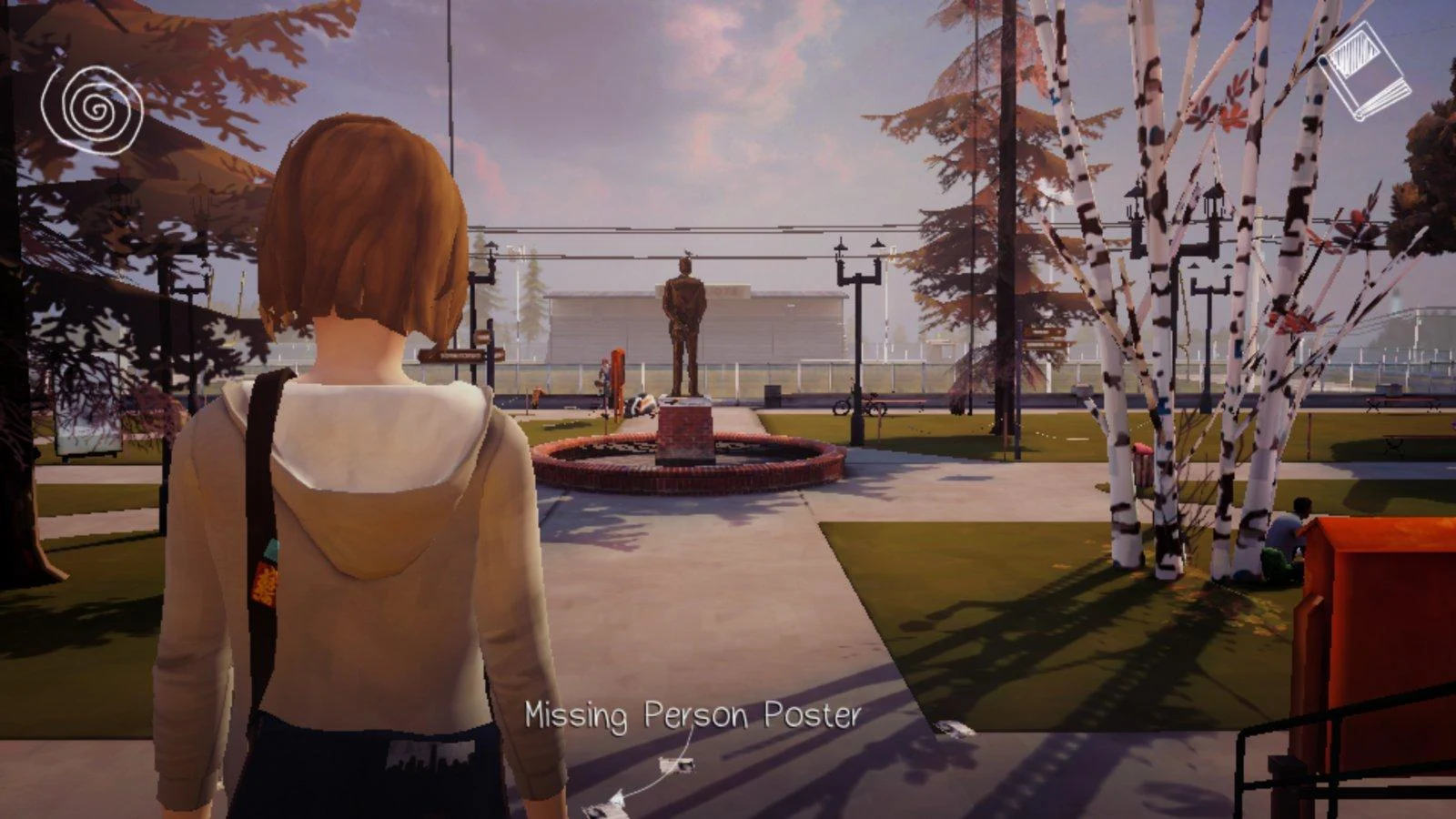
There is something of this in our relationship with fictional worlds.
We can return to Arcadia Bay whenever we wish. We can install the game again, follow the same paths, listen to the same conversations, and watch the same scenes unfold.
Yet we cannot truly return to our first encounter with it.
We already know what happens. We know the people, their secrets, their tragedies. The uncertainty that once gave the experience its peculiar intensity is gone.
And perhaps we have changed as well.
The game remains substantially the same, but the person returning to it is no longer quite the person who first played it.
That is a different sort of impermanence. The fictional world has survived, preserved in software, but the original experience belongs to a moment in our lives that has already passed.
It is tempting to think that nostalgia is simply a longing for the past. But sometimes it seems closer to a longing for the way we once experienced things.
Why music brings us back
There is some science behind this.
Psychologists have studied what they call music-evoked autobiographical memories: personal memories that emerge when we hear familiar music.
Songs can evoke remarkably detailed recollections, often accompanied by strong emotions. Research also suggests that nostalgia associated with music is influenced by familiarity, personal significance, and the combination of positive and negative feelings a song produces.
In other words, music can become entangled with the circumstances in which we first encountered it.
This helps explain why a song can bring back an entire period of our lives.
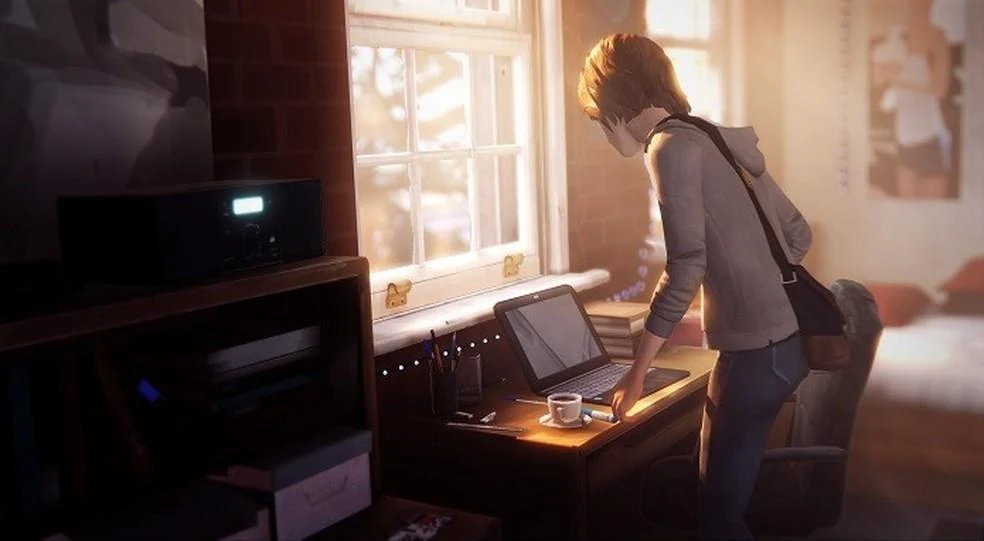
But Life Is Strange complicates the picture.
The memories are not exclusively autobiographical in the ordinary sense. We remember our experience of playing the game, certainly, but that experience is intertwined with a fictional life, a fictional town, and events that never occurred.
The soundtrack provides a bridge between the two.
The effect is hardly confined to games. Afterlife’s Breather 2000 (Arithunda Mix), included on Café del Mar Volumen Siete, is associated with the Mediterranean atmosphere of Ibiza. Yet for one listener, it brings back something entirely different: a late-night train journey from Kumamoto to Kagoshima, listening to the track on a MiniDisc player as the Japanese countryside passed outside the window. The music became attached to that particular journey, so that hearing it years later can bring back the atmosphere of a place far removed from the one suggested by the compilation. Sometimes music conjures places we have never visited. At other times, it preserves places we once knew, complete with details we might otherwise have forgotten.
Syd Matters' To All of You is rather explicitly addressed to American girls, yet that specificity seems to matter surprisingly little once the song becomes part of Life Is Strange. A listener does not have to be American, know any of the people described, or share the songwriter's particular experiences. The song acquires another association: the walk through Blackwell Academy, the atmosphere of Arcadia Bay, and a particular moment in a fictional life. Its original subject remains, but the listener's own experience settles over it. Eventually, hearing the opening notes can feel less like listening to a song about someone else's world and more like returning to a place we once knew.
Syd Matters' music is real. So is our emotional response to it. The world we associate with that music may be fictional, but the experience of inhabiting it was not.
Perhaps that distinction matters less to our emotions than we might expect.
The beauty of the imperfect
There is another quality to the atmosphere of Life Is Strange that deserves attention.
Its world is not pristine.
The photography, handwritten notes, cluttered bedrooms, faded posters, and weathered environments give Arcadia Bay a distinctly lived-in appearance. Much of its music, particularly its indie folk selections, shares that intimate quality.
It is not necessarily lo-fi in the strict technical sense. The recordings are professionally produced, and the game's visual presentation is carefully constructed.
But the aesthetic has much in common with the sensibilities associated with lo-fi music and imagery.
Consider the appeal of old cassette recordings, the faint hiss of magnetic tape, the crackle of vinyl, or photographs whose colors have faded with age.
Technically, these can be regarded as defects.
Yet we sometimes find ourselves attached to precisely those defects.
A perfectly clean digital recording may reproduce a performance with extraordinary fidelity. But an older recording, complete with its limitations, may evoke something the cleaner version does not.
Not because the imperfections necessarily improve the music, but because they have become part of our experience of it.
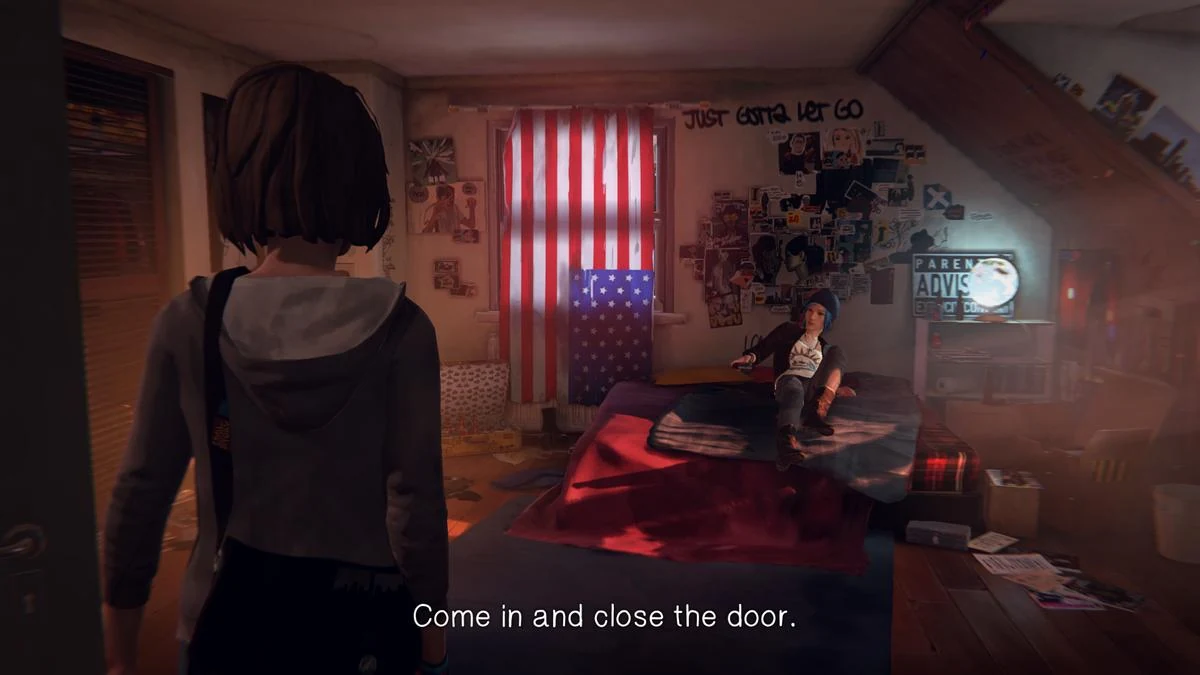
This brings us to another Japanese aesthetic idea: wabi-sabi.
Associated with simplicity, imperfection, age, and the beauty of things marked by time, wabi-sabi offers a different way of appreciating objects and experiences.
A weathered wooden table, a ceramic bowl bearing the marks of use, an old building whose surfaces have changed through decades of exposure. Their appeal need not depend on flawlessness.
Indeed, part of their beauty may lie in the evidence that they have endured.
Wabi-sabi and mono no aware are distinct traditions and should not be reduced to convenient descriptions of nostalgia. But both offer ways of thinking about our emotional responses to time and change.
And perhaps they help explain why certain aesthetic imperfections seem to make fictional worlds feel more human.
A faded photograph suggests a history. A scratched record suggests use. An untidy bedroom suggests someone lives there.
Even when all these things have been deliberately constructed.
Landscapes we seem to remember
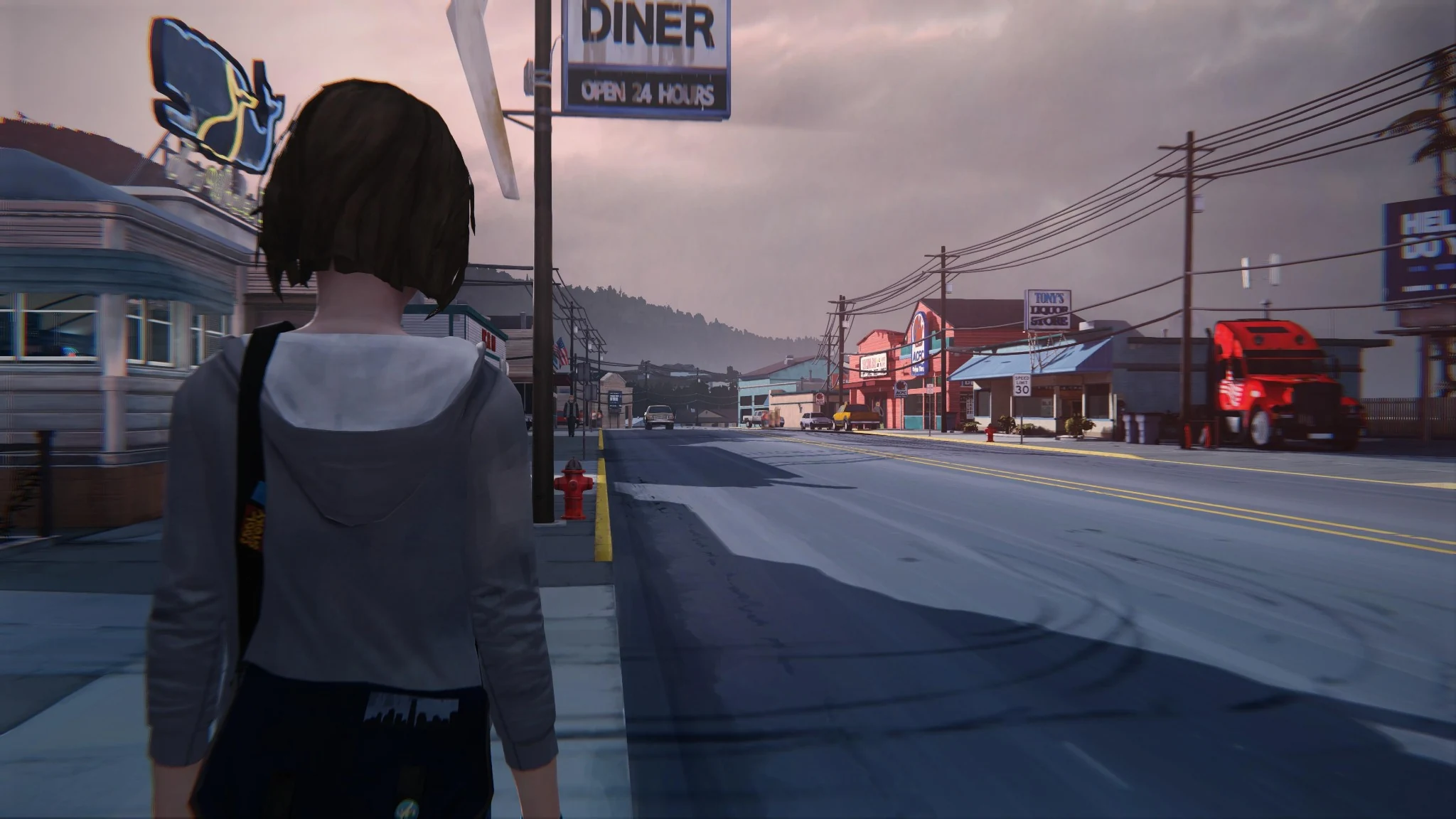
The same feeling can arrive without a game or even a song. Consider the paintings of Bob Ross: mountains behind quiet lakes, tall pines, a clearing beside a stream, sometimes a small cabin tucked into the trees. These are not necessarily portraits of particular places. Yet there is an ease with which we can imagine having been there. The landscape feels less like somewhere newly discovered than somewhere remembered.
Ross adds another layer of familiarity. For those who grew up watching The Joy of Painting, the paintings may recall the sound of his voice and the reassuring process by which a blank canvas became a mountain valley. Someone encountering the programme much later may feel something different: an affection for its quiet pace and its unhurried promise that a landscape can be made, almost casually, in half an hour. Neither feeling requires us to mistake the painting for a real place. The experience of watching was real, and the imagined landscape has become attached to it.
For now, it is another reminder that the places we miss need not have existed outside an image.
Imperfection in an age of artificial perfection
This becomes particularly interesting now that artificial intelligence can generate remarkably polished images, music, and written language.
For much of the history of art and technology, technical perfection was difficult to achieve. It demanded expertise, patience, and often considerable expense.
Today, many aspects of that perfection can be reproduced almost instantaneously.
An image can have flawless lighting. A synthetic voice can deliver every note with precision. A piece of writing can emerge grammatically correct, elegantly structured, and entirely free of the awkwardness that often accompanies human expression.
And yet something may still feel absent.
Perhaps the strange thing about an age of artificial perfection is that we have begun to miss the imperfections that once annoyed us.
The slight hesitation in a singer's voice. The sound of fingers moving along guitar strings. The uneven timing of a performance recorded in a small room.
These details can remind us that music is not simply an arrangement of sounds. It is also an act performed by someone, somewhere, at a particular moment in time.
Of course, artificial intelligence can reproduce these imperfections too.
A synthetic recording can include tape hiss. A generated photograph can have scratches and faded colors. A machine can imitate the tremor in a human voice.
Imperfection is no guarantee of authenticity.
And this is where the distinction becomes important.
Perhaps what we value is not imperfection itself, but the human presence we associate with it.
The knowledge, or at least the belief, that someone made something, struggled with it, changed it, and eventually decided that it was finished.
Technical perfection and artistic excellence are not necessarily the same thing.
Nor is human creativity defined by its flaws. A beautifully executed performance does not become less human simply because it is technically excellent.
But the increasingly effortless production of polished digital content may be changing what we look for in creative work.
When perfection becomes commonplace, intention and individuality may become more important.
And perhaps this is one reason why the imperfect worlds of older games, films, and recordings continue to hold such power over us.
Their limitations have become part of their identity.
Gabriel Lee approaches a related attraction from another direction in The Past We Never Lived: why we enter reconstructed historical places knowing that none of them can return us to the original world. There is also a curious counterpart in his account of the Great Moon Hoax of 1835, when a newspaper supplied readers with a detailed lunar landscape that no one had seen. Those readers were being asked to believe a claim, not merely enjoy a fiction, and many questioned it. But the incident illustrates how readily an imagined place can acquire detail and apparent presence.
Returning to Arcadia Bay
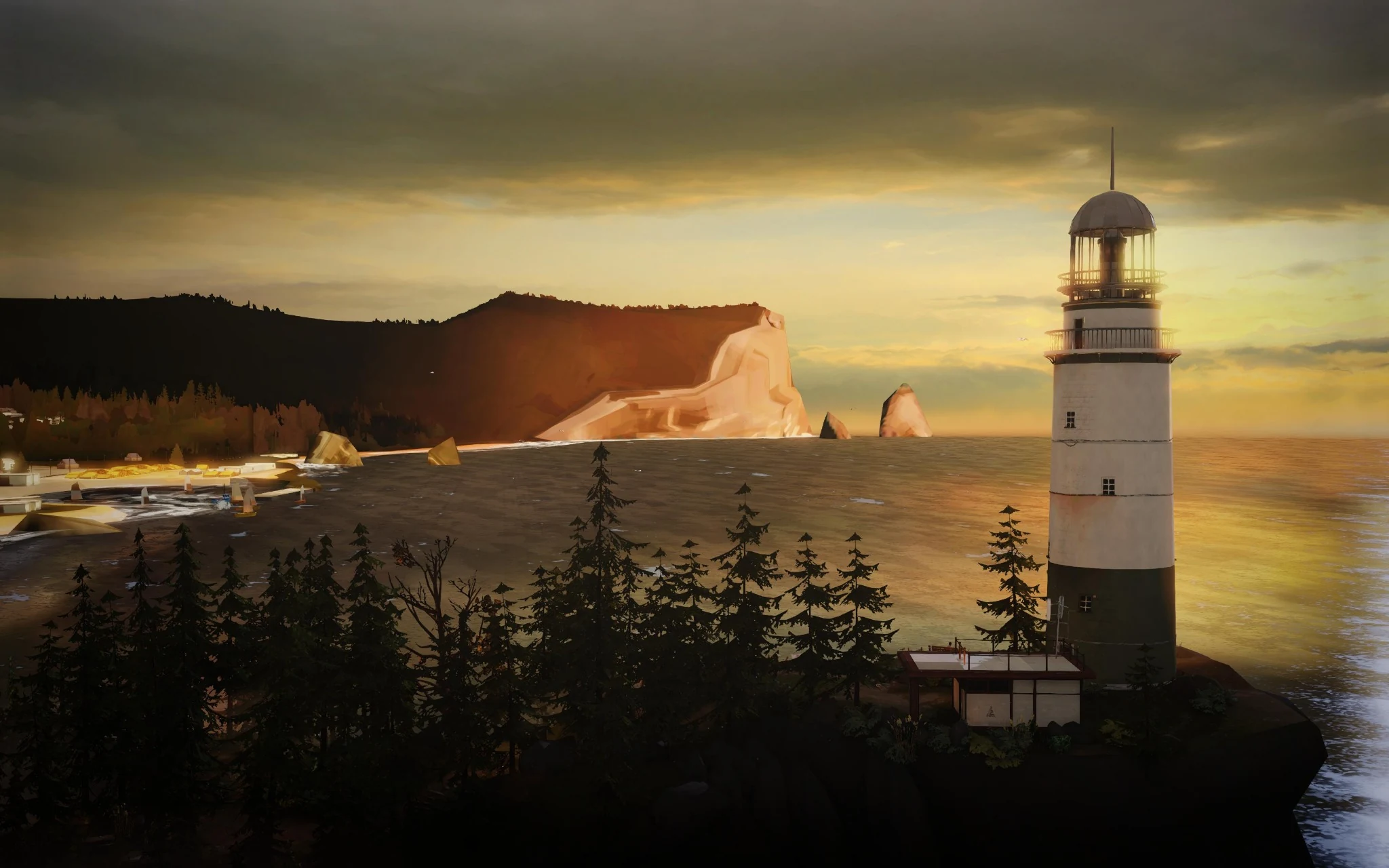
There is a certain irony in all this. Life Is Strange is itself an artificial world. Its streets were designed, its sunsets rendered, its characters written and voiced. Yet the memories it created can feel intensely personal, because our time in that world was real even when the town was not.
The game's rewind mechanic also gives this a curious edge. Max can revisit moments and change what follows. The player, returning years later, cannot quite do the same. We know the paths now; the surprise of first discovering them belongs to an earlier self. That is different from déjà vu, the unsettling sense of familiarity without an accessible prior memory that delMar examines in Déjà Vu and the Problem of Familiarity. But both invite us to ask what a feeling of recognition actually tells us.
Years later, To All of You may still bring back Arcadia Bay: the corridors of Blackwell Academy, the afternoon light, and the particular time in life when we first encountered them. We can return to the game, walk those same corridors, hear the same music, and watch the same sunsets. Everything will be where we left it.
Except us.
Perhaps that is what we really miss. Not just a place we have never been, but the person we were when we first went there.
Sources and further reading
- Café del Mar, official playlist, lists Afterlife, Breather 2000 (Arithunda Mix): Official playlist
- PBS, The Best of the Joy of Painting with Bob Ross (programme and subjects): https://www.pbs.org/show/best-joy-painting/