
Why We Like Being Frightened
The Science of Horror, Fear, and the Pleasure of Being Scared

There is an obvious problem with horror as entertainment: most of us spend a considerable part of our lives avoiding the very things that horror asks us to enjoy.
We lock doors, take precautions against illness, avoid dangerous roads, and teach children not to follow strangers. Then, in the evening, we pay to watch someone open the door they should have left closed. We sit through an hour of ominous footsteps, or enter a haunted attraction knowing that a stranger is waiting somewhere in the dark to make us scream. Some of us are disappointed if the experience is not frightening enough.
It is tempting to explain this away as a taste for adrenaline. That is part of the answer, sometimes, but it is not a very satisfying one. People also enjoy quiet dread, elaborate mysteries, grotesque transformations, and stories that trouble them long after the immediate excitement has passed. Others enjoy the monsters but not the fear, or are interested in the subject without enjoying being startled at all.
The more interesting question is not simply why we enjoy fear. It is how an emotion designed to make danger difficult to ignore can become part of an experience we choose, manage, share, and sometimes remember with affection.
Fear without the usual consequences
Fear is useful. Its bodily and cognitive responses help organisms attend to potential threats and prepare for action. In humans, these responses are entangled with memory, expectation, social information, and imagination. A sound in the next room becomes considerably more alarming if we already believe someone might be inside the house.
But fear is not one uniform reaction. A jump scare can produce abrupt surprise and arousal. Suspense depends on anticipation, especially when we know enough to worry but not enough to predict what comes next. Disgust can make a horror scene difficult to watch without making it frightening. Fascination may keep us looking at something we would not wish to encounter ourselves. Enjoyment is another matter again. We can feel some of these together, or only one at a time.
This helps explain why the same film can be a delight to one viewer, a tedious exercise to another, and a deeply unpleasant experience to a third. The first may enjoy anticipating the next appearance of the monster. The second may see the staging too clearly to be unsettled. The third may find the subject uncomfortably close to something personally important.
A fictional threat has a peculiar advantage: it can summon genuine feelings while usually withholding the consequences those feelings evolved to address. We can follow the danger, test an expectation, and decide whether to continue. The vampire does not come home with us. At least that is what the rules of the experience tell us.
Those rules matter more than the apparent intensity of the frightening material. A child who enjoys a spooky tale told by a trusted adult may reject a milder story presented in an unfamiliar setting. An adult may enjoy a disturbing film alone but hate being surprised by a costumed stranger in a public place. Context changes what fear means.
The amount of fear that feels right
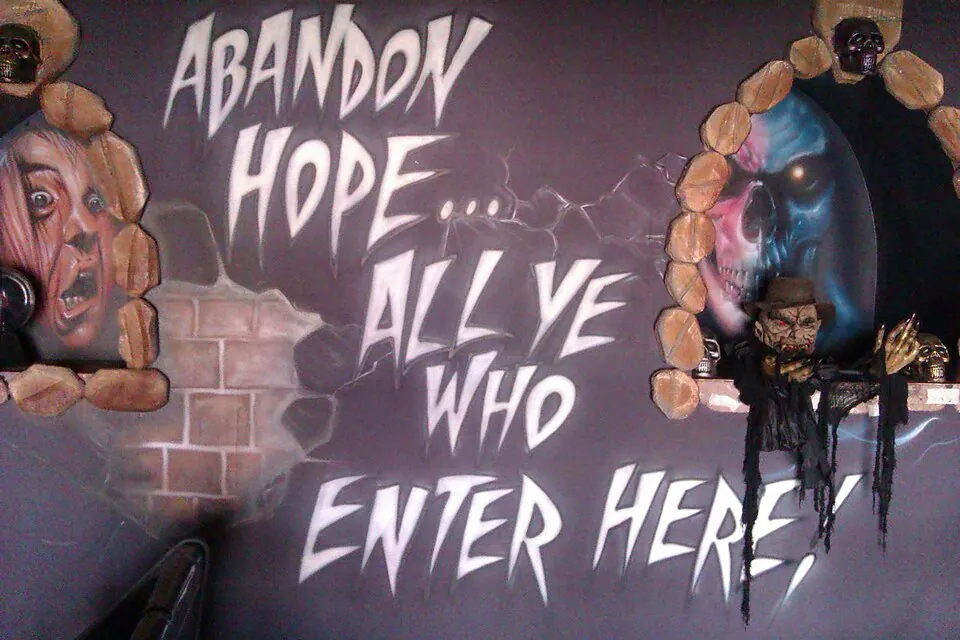
In a particularly useful field study, Marc Malmdorf Andersen and colleagues examined 110 visitors to a commercial haunted attraction. Participants wore heart-rate monitors, were recorded at selected scare points, and reported fear and enjoyment. The researchers found an inverted-U relationship between enjoyment and momentary self-reported fear: too little fear was less enjoyable, but so was too much. Small-scale fluctuations in heart rate showed a related pattern (Andersen et al., 2020).
There is a straightforward interpretation. Recreational fear often works best when a person feels challenged without being overwhelmed. A haunted attraction that never surprises anyone is boring; one that makes a visitor feel genuinely unsafe may stop being entertainment.
Yet the shape of that curve should not be mistaken for a universal law. The study concerned visitors to one attraction, people who had already chosen to enter, and the curved relationship appeared in repeated, local measurements rather than in an overall retrospective rating of the visit. The study demonstrates that fear and enjoyment can coexist and change together in that setting. It does not establish an ideal physiological dose of terror for every person, much less for every form of horror.
What makes the finding interesting is that the experience is dynamic. Horror does not simply switch fear on and leave it there. It raises expectations, delays events, provides relief, then begins again. A good haunted house controls timing. So does a filmmaker who keeps the monster just outside the frame, or a musician who withholds the expected beat. The tension between uncertainty and resolution is often the entertainment.
A threat we can examine
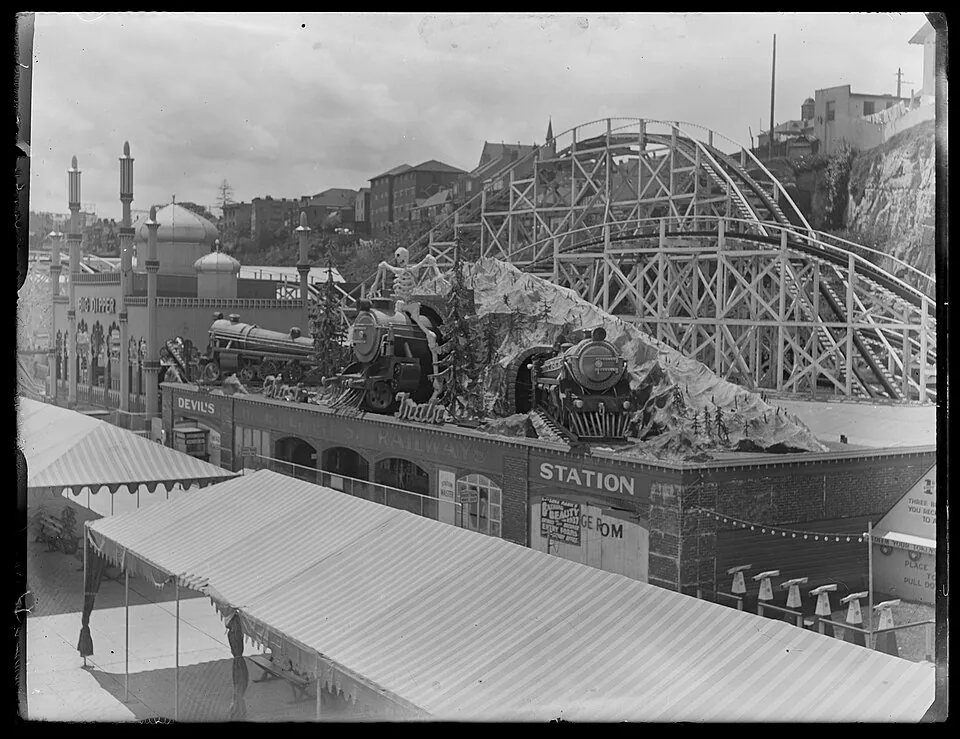
One influential idea is that frightening fiction provides something like a simulation of danger. We can observe predatory behaviour, social betrayal, contagion, isolation, or the collapse of ordinary rules without paying the full price of discovering those situations in real life.
This does not mean horror films are instructional manuals. Nobody should learn infection control from a zombie film. Their possible value is less literal: we imagine what matters, notice which cues are ambiguous, and see how people behave under pressure. We can mentally rehearse uncertainty itself.
This possibility became unusually relevant during the COVID-19 pandemic. In a survey of 310 US adults recruited in April 2020, Coltan Scrivner and colleagues reported that horror fandom was associated with lower psychological distress, while interest in certain apocalyptic or survival-related genres was associated with aspects of preparedness. Trait morbid curiosity was associated with greater positive resilience as measured in the study (Scrivner et al., 2021).
These were associations, not evidence that viewing horror had made people resilient. People who already tolerate uncertainty or seek unsettling information may be more inclined to watch frightening films. Other differences between viewers may also matter. The study was an intriguing test of a plausible hypothesis, not proof that horror is psychological training.
Even with that qualification, it raises a worthwhile question. Perhaps the attraction of some frightening stories lies not in a desire to suffer, but in a wish to investigate danger when we still have the freedom to stop looking.
That is one reason the term morbid curiosity is easily misunderstood. Curiosity about injury, death, threatening people, or disasters need not imply cruelty or a wish for harm. Sometimes the very subjects we hope never to encounter are the ones we most want to understand. In this respect horror belongs to a much wider human habit: imagining difficult possibilities before they occur, or studying them after they have occurred, because the unknown itself is unsettling.
Why one monster works and another does not
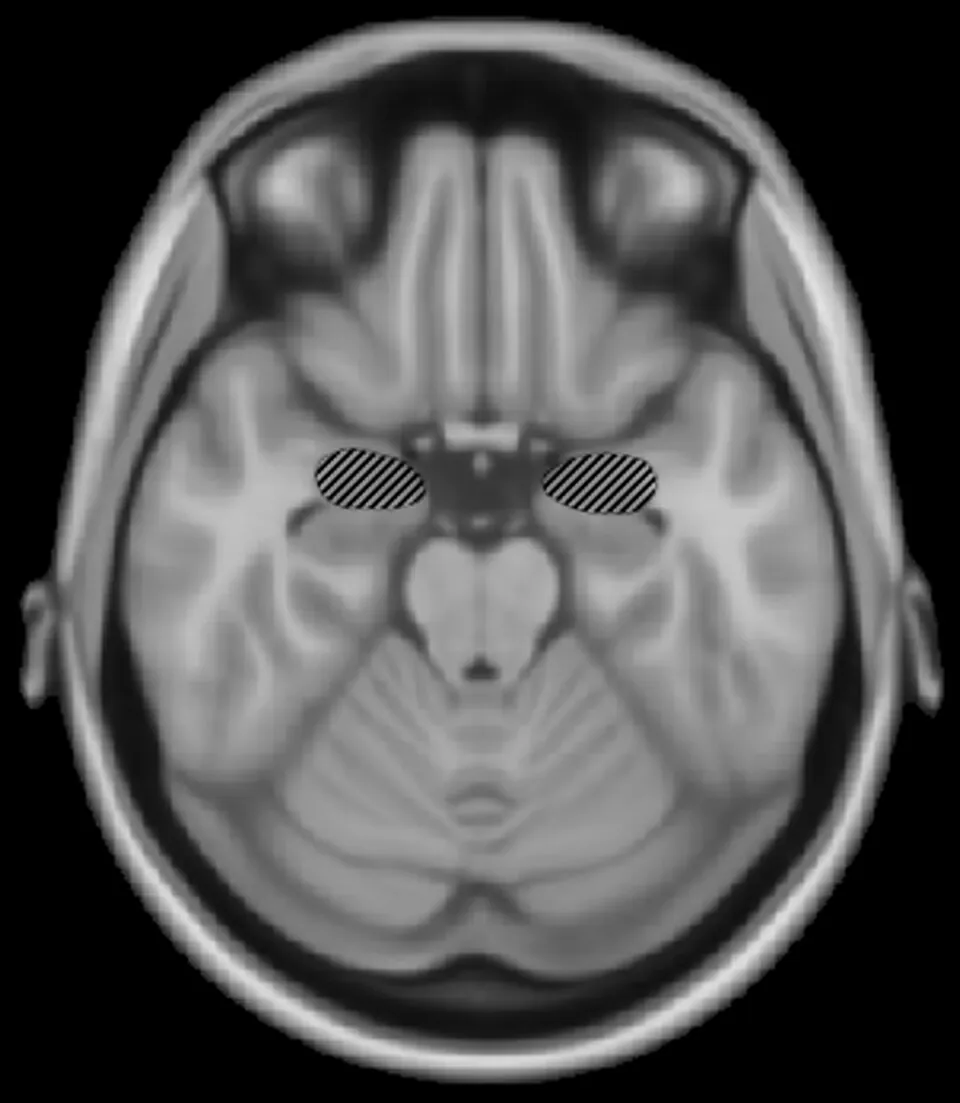
Horror is frequently discussed as if its creatures were ranked by objective scariness. Demons outrank serial killers; ghosts outrank zombies; or perhaps the opposite, depending on the speaker. But the emotional force of a threat depends on what the viewer thinks can be done about it.
Consider a familiar slasher scenario. A masked attacker approaches, carrying a weapon. For one viewer, this is terrifying: there is another person intent on violence and escape may be impossible. For someone accustomed to thinking through physical threats, the same scene may immediately become a problem of distance, obstacles, exits, and the attacker's limitations. That does not make the imagined danger harmless. It does mean the viewer has shifted from helpless anticipation to practical appraisal.
Now replace the attacker with a threat whose rules are unknown. Perhaps the danger is intimately connected to a family member, an illness, or a loss that cannot be reversed. There is no clear exit to identify, no opponent whose reach and movement can be estimated. A story about grief may be profoundly disturbing without producing a single conventional jump scare.
This contrast helps account for why viewers can be relatively unmoved by films such as Friday the 13th or Scream while finding Pet Sematary or The Serpent and the Rainbow much harder to shake. The films evoke different kinds of vulnerability. The first group often dramatizes physical pursuit; the latter examples invite anxieties about bereavement, bodily autonomy, uncertainty, and the possibility that something precious cannot be rescued by ordinary action. These are readings of the stories, not diagnoses of the people who respond to them.
A film may also impress without frightening. The Exorcist, for example, can be appreciated for its technical craft, performances, editing, and cultural impact by a viewer who experiences little personal terror. Aesthetic appreciation and fearful arousal are not interchangeable.
The more general point is that a monster is not frightening merely because it is powerful. It becomes frightening when the story persuades us that something we value is exposed, and that our usual ways of protecting it may fail.
Control, choice, and the ability to leave
One of the pleasures of recreational horror is that it often offers a small but meaningful amount of control. We choose the film, the seat, the volume, the company, and whether to keep watching. In games, the sense of agency can be greater still: we decide where to move, whether to investigate, when to hide, and whether to risk opening a door.
Paradoxically, horror games can become more intense because they grant control while making us uncertain that our choices are adequate. A spectator knows that a character will make a foolish decision. A player must make the decision and bear its fictional consequences. Agency does not cancel fear; it changes our relationship with it.
The freedom to stop is important even when we do not use it. A haunted attraction is different from an actual emergency partly because participants understand, and trust, an agreed frame of play. A film can show appalling things while the viewer remains physically safe on a sofa. A frightening tale told among friends can end in laughter because everyone returns together to ordinary conversation.
We should not exaggerate this control. Some horror experiences include social pressure, unexpected triggers, or a feeling that one cannot easily leave without embarrassment. Others involve material that lingers as intrusive imagery or sleep disturbance. Enjoyment is not guaranteed by the mere knowledge that a threat is fictional. The ability to consent to an experience and adjust its intensity makes a difference.
So do personal histories. A person who has lived through violence, bereavement, or illness may encounter a scene quite differently from someone for whom it is purely imaginative. Neither reaction is a failure to appreciate the genre.
Fear is social, even when we experience it alone
Horror has always been shared: around fires, in religious and folk narratives, at theatrical performances, in cinemas, at concerts, and now through online communities and multiplayer games. Being frightened in company allows us to compare reactions and signal that the danger has passed. The embarrassed laugh after a sudden scream is a familiar example.
There is also pleasure in recognizing a convention. An ominous basement, a badly lit corridor, a telephone that rings at the wrong moment: experienced audiences know the warning signs. The satisfaction is partly predictive. We are not merely subjected to the story; we participate in its construction.
This is especially visible in horror music. The psychobilly performance described in Mara C.'s companion essay, Rockabilly from the Crypt, does not normally require an audience to believe a monster is present. The skulls, coffins, distortion, theatrical threats, and gleefully excessive lyrics create a vocabulary that everyone understands is being played with. The imagery of danger becomes an occasion for rhythm, humour, identification, and community.
Other musical traditions cultivate a different feeling: unease rather than amusement, a sense of ritual rather than theatrical parody. Slow repetition, unfamiliar timbres, an unresolved drone, or a human voice processed until it sounds not quite human can unsettle expectations without telling any story at all. Music can create apprehension even when it gives us no identifiable object to fear.
The social setting still matters. What sounds ominous in headphones at midnight may sound exhilarating among friends at a concert.

The things that reassure us
There is another question worth asking, particularly when horror touches on spirits, curses, possession, or the dead. Does a belief that one is protected alter the experience of fear?
It is a plausible research question. A person's appraisal of danger can depend on whether they feel they have resources, allies, knowledge, or meaningful forms of protection. Those resources may be practical, interpersonal, religious, or symbolic. A medal worn for protection, a prayer learned in childhood, or a familiar ritual may provide assurance to the person who trusts it.
The psychological experience of assurance can be studied without claiming that an object or ritual has demonstrated supernatural efficacy. Conversely, describing that experience in psychological terms does not settle the theological or metaphysical claims of believers. These are distinct kinds of questions.
Gabriel Lee's companion essay, Objects of Protection, concerns precisely these objects and the histories that give them meaning. For the study of fear, their relevance is not simply whether a person believes something dangerous exists, but also whether that person believes there is a way to meet it.
This should not be simplified into the idea that religious people are necessarily less afraid of supernatural horror. Belief may supply reassurance in one context and make a particular fictional threat feel more plausible in another. Individual responses and cultural expectations would need to be measured rather than assumed.
Not everyone wants the same darkness
Some people actively seek disturbing fiction. Some will watch a monster film but avoid realistic cruelty. Others enjoy gothic atmosphere and supernatural mysteries but dislike gore. Still others have no interest in horror, or enjoy it only in particular company. No single explanation needs to fit all of them.
The stories also change with age, experience, and circumstance. A childhood ghost story may lose its power when its mechanism becomes obvious. A story about losing a parent or child may gain force later in life, without adding any new special effects. What we know about the world can make some threats more manageable and others harder to contemplate.
Even within one person, amusement, disgust, dread, and curiosity can compete. A creature design can be fascinating while its implied suffering is repellent. A well-made film can be admired and never watched again. A modestly frightening story may be revisited dozens of times because it offers a familiar and enjoyable structure.
The existence of these differences is not an inconvenience to be eliminated. It is the most interesting part of the problem. Fear is not merely a reaction to an external object. It is also an appraisal of what that object means, what is at stake, and what we think can happen next.
Returning to the light
Perhaps the strangest part of recreational horror comes at the end. We leave the cinema. The lights come on. Someone complains about an implausible decision, praises the effects, or laughs at how badly they jumped. A friend who spent the entire film hiding behind a hand says it was wonderful. Another says never again.
Nothing in that sequence implies that fear has ceased to do its original work. We still avoid real danger. We have simply learned to place certain frightening experiences inside another frame: story, play, experiment, company, aesthetic pleasure.
Sometimes the reward is excitement. Sometimes it is curiosity satisfied, a feeling of having endured something, or the relief that follows a sustained tension. Sometimes a story disturbs us because it has found something we cannot easily dismiss. The most lasting horror may not be the threat we imagine fighting, but the possibility we cannot solve.
We return to such stories not because we have forgotten that the world contains danger. We may return because, for a little while, we can look at danger without surrendering entirely to it.