
The Dead Come Visiting
Halloween and the Many Ways We Remember the Departed
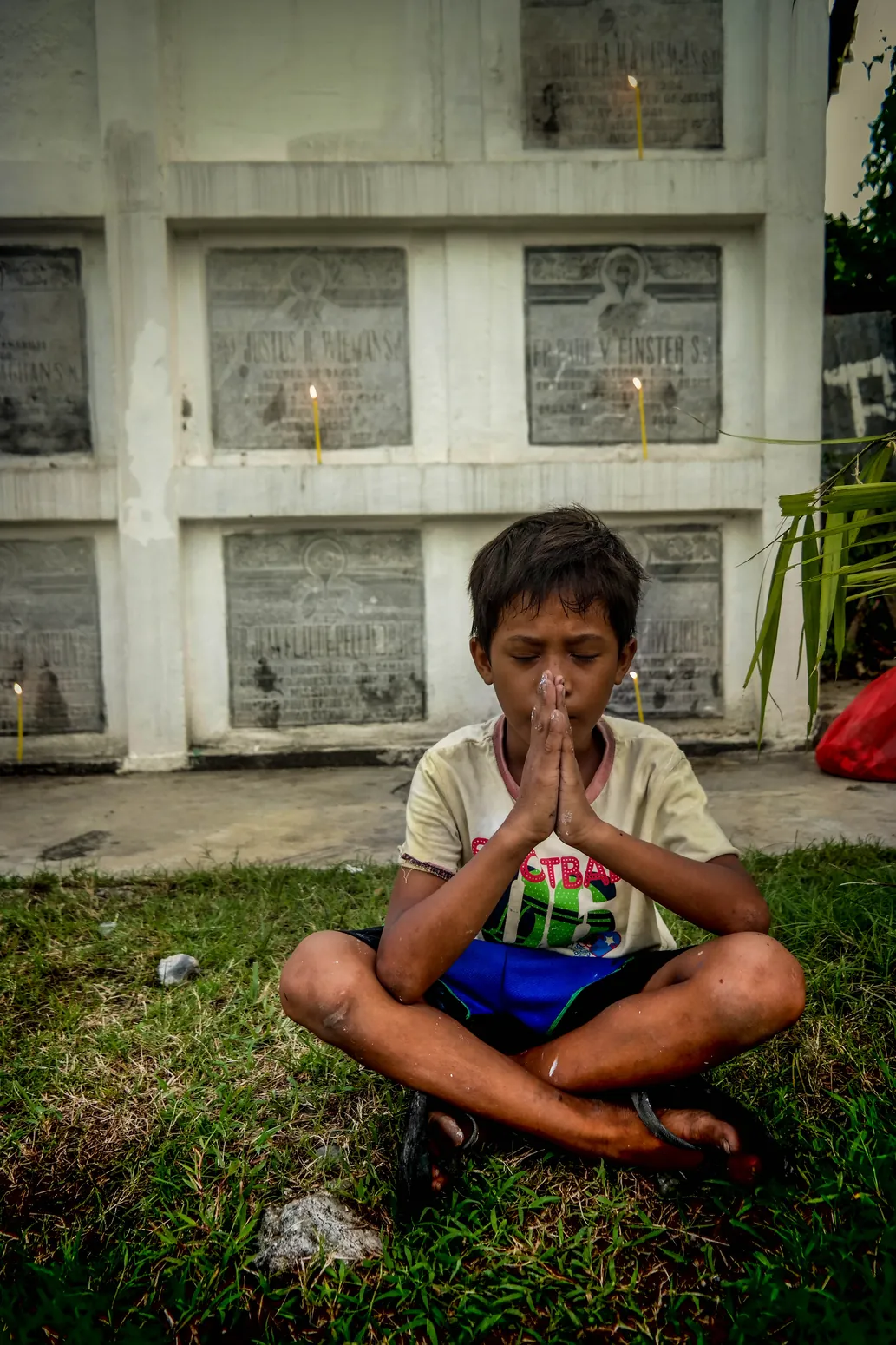
There are nights when the living make room for the dead.
Sometimes this means lighting a candle before a photograph, cleaning a grave, or putting out food that no living guest is expected to eat. Elsewhere it means setting a lantern by the door, gathering in a temple, or singing outside a neighbour's house as though the souls of the departed had come begging. Some customs are solemn. Others involve laughter, masks, children, sweets, and quite deliberate mischief. They can look remarkably similar from a distance. Up close, they often have very different histories.
Halloween is probably the world's most recognisable festival associated with the return of the dead, although the modern holiday is as much about costumes, entertainment, and commerce as remembrance. It did not spring fully formed from one ancient ceremony. It accumulated meanings over centuries, through changes in agriculture, religion, migration, and popular culture. And beyond Halloween's particular history are other observances that answer a question many societies have asked: once someone has died, what remains of our obligations to them?
The answers are neither universal nor necessarily compatible. One community prays for the dead. Another invites them home. Another offers merit on their behalf. Yet another remembers without presuming that the departed literally return. The resemblance is worth examining, but so are the differences.
The Irish threshold
The Irish festival of Samhain, associated with the beginning of winter, occupies an important place in the history of Halloween. In the traditional calendar it marked a turning point after the principal agricultural work of the warmer months. Livestock and households had to be prepared for the darker season. The date mattered materially before it acquired all the supernatural associations now attached to it.
Early Irish literature places Samhain at significant gatherings and at moments when encounters with the Otherworld become possible or dangerous. In stories composed or preserved by Christian writers, ordinary boundaries grow uncertain, and beings who are not quite human interfere with human affairs. Those stories are valuable evidence for medieval Irish ideas, but they are not documentary accounts of exactly what every community did in pre-Christian Ireland.
That distinction matters. Popular histories often describe Samhain as an ancient Celtic New Year, a universal festival of the dead, and the direct ancestor of every modern Halloween custom. The evidence is more complicated. Historian Ronald Hutton has examined how the familiar account of a pagan Celtic New Year and great feast of the dead was developed and popularised by later scholars, particularly in the nineteenth and early twentieth centuries. Samhain was certainly an important seasonal occasion. Its supernatural associations in Irish tradition are well attested. But the claim that we can reconstruct one continuous, unchanged pagan ritual from antiquity to today's trick-or-treating goes far beyond what the surviving records permit.
Nor should we imagine that Irish people needed one fixed theory of ghosts to make the season meaningful. Winter brought practical vulnerability: less daylight, uncertain weather, stored food, and the need to keep people and animals safe. Stories about visitors from another world gained force in such a setting. A house could be a place of warmth and kinship, while the road beyond it became a place of possible danger.
The National Museum of Ireland records later Halloween customs involving meals, fruit and nuts, marriage divination, disguises, and protective objects. Families could expect dead relatives to return to the household, yet fear less familiar presences outside. The distinction between a welcome ancestor and a troubling spirit was important. It explains why hospitality and defence might belong to the same evening.
Not every ghost was an enemy, and not every stranger could be trusted.
Saints, souls, and the changing calendar
The name Halloween comes from All Hallows' Eve, the evening before All Saints' Day. That Christian calendar is not a decorative addition to an otherwise intact pagan festival. It formed a substantial part of the observance's history.
All Saints' Day, celebrated in Western Christianity on 1 November, honours the saints. All Souls' Day, on 2 November, developed as a particular occasion for remembering and praying for the faithful departed. The observance of All Souls became influential across Western Europe through the medieval monastic world, notably Cluny. Together, these days shaped a season in which the living encountered death not only through folklore but also through worship, bells, offerings, and petitions for souls.
The theological distinction is significant. In Catholic practice, prayer for the dead belongs to a particular understanding of salvation and the communion of saints. In local folklore, a returning soul may be imagined as needing food, warmth, or acknowledgement. Such practices can coexist, overlap, or cause discomfort within the same community. Their coexistence does not make them identical.
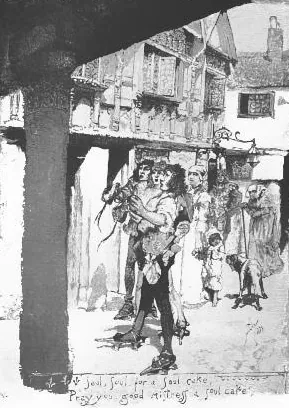
Medieval and later customs also involved movement between houses. Souling, in forms documented in Britain, involved people seeking food or gifts in connection with prayers for the dead. Guising and seasonal masking allowed visitors to perform, demand treats, play tricks, or temporarily escape ordinary social expectations. It is tempting to draw a straight line from these practices to children ringing doorbells in plastic vampire teeth. A better account recognises a family resemblance formed by several traditions, changing in different places and periods.
Across the Atlantic, Irish and other migrants carried seasonal customs into North America. Older disguises and lanterns changed in a different material world. The carved turnip gave way, in a now-familiar version of the custom, to the more accommodating pumpkin. Urban life, commercial sweets, mass-produced costumes, and film helped reshape the holiday once more.
The result is not a fraudulent Halloween because it has changed. Change is precisely how festivals survive. What is misleading is the promise that every commercial costume or carved pumpkin can be traced, without interruption, to a particular pre-Christian rite.
Undas: the cemetery becomes a household
In the Philippines, the days surrounding 1 and 2 November are often understood through Undas, an observance centred on the departed and the families who still claim them. People clean graves, carry candles and flowers, pray, share meals, and spend long hours among relatives they may not have seen for months. Cemeteries become temporarily crowded social spaces. Mourning remains present, but so does reunion.
The Christian calendar supplies the formal dates: All Saints' Day and All Souls' Day. Yet the details of observance vary by region, family, and community. What is called simply “Filipino tradition” may in fact be a collection of practices with different local histories.
Consider atang, documented among Ilocano communities. Food can be offered in relation to the departed, reflecting understandings of the soul and its continuing connection with the living. The National Museum of the Philippines describes atang in contexts extending beyond the annual cemetery visit, including the aftermath of death, dreams, and occasions when a relative believes a departed person needs acknowledgement or appeasement. This is more specific than saying that “Filipinos leave food for ghosts.” It concerns particular relationships, obligations, and interpretations of misfortune or communication.
In Pangasinan, reported Undas practices include preparation of inlubi, prayer gatherings, and singing customs. A Philippine Information Agency account describes panagkamarerwa, in which singers take the part of visiting souls, sometimes incorporating playful transgression. Such details remind us that a rite of remembrance need not be uniformly sombre.
A related Tagalog tradition, pangangaluluwa, makes the connection between song, the dead, and household hospitality especially vivid. Groups of singers go from house to house, representing or invoking souls and requesting alms or food. Archival work discussed by the University of the Philippines Center for Ethnomusicology places the custom within a specific Tagalog musical and religious context. Its resemblance to souling or guising is intriguing, but resemblance alone cannot establish common origin. In particular, claims that a modern practice is straightforwardly “precolonial” deserve scrutiny when its recorded form includes Christian prayers and concepts of purgatory.
One might say that Undas briefly reverses the normal arrangement of a cemetery. Rather than being a place families visit only in small, scattered groups, it becomes a gathering place for the living. Food is unpacked, stories are repeated, children are introduced to names and faces, and the dead remain part of the family conversation. The grave marks an absence, but it is also an address to which people return.
That is not the same as claiming every participant believes a soul is physically present. A person may pray according to Catholic teaching, honour a local inherited custom, keep faith with family expectations, or simply refuse to let a name vanish. The same candle can mean different things to different people.
Japan: welcoming and sending away
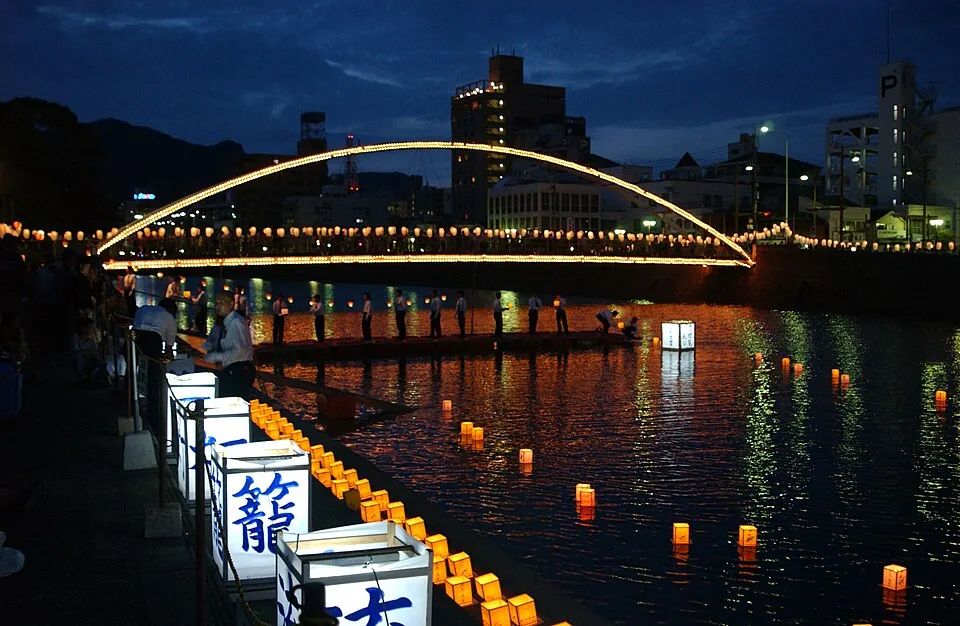
Japan's Obon offers a different, equally instructive encounter with the departed. Often observed in August, although timing varies regionally, Obon combines Buddhist elements with Japanese ancestral practices. Families may return to their hometowns, tend graves, prepare household offerings, and observe ceremonies of welcome and farewell.
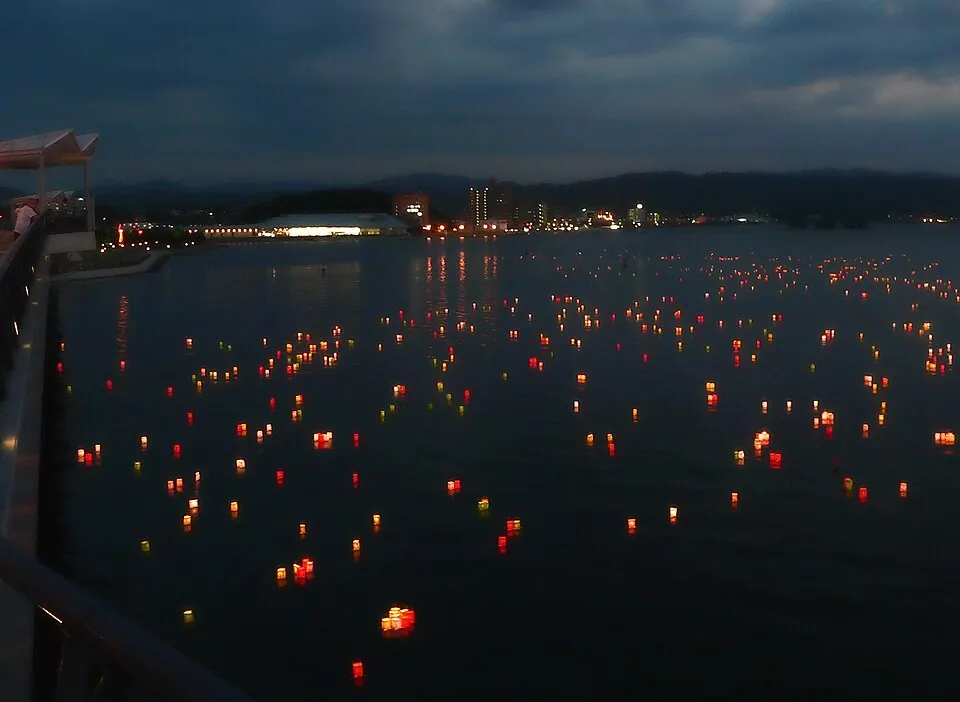
In some local traditions, a mukaebi, or welcoming fire, helps guide the spirits home. An okuribi, or sending-off fire, marks their departure. Lanterns may serve comparable purposes. The symbolism is straightforward and affecting: someone who once knew the road to the house may now require a light to find it again.
Obon is not a Japanese Halloween. It is not observed on the same dates, nor does it have the same genealogy. Its Buddhist setting, family obligations, and regional traditions deserve explanation on their own terms. Bon odori, the dances associated with Obon, also remind us that remembrance and celebration can coexist without turning death into a joke.
There is a subtle discipline in the rhythm of welcoming and sending away. The dead are honoured, but the living must continue their ordinary lives. Ritual provides both a period of closeness and a way to conclude it, at least until the next observance.
Mexico: the road between worlds
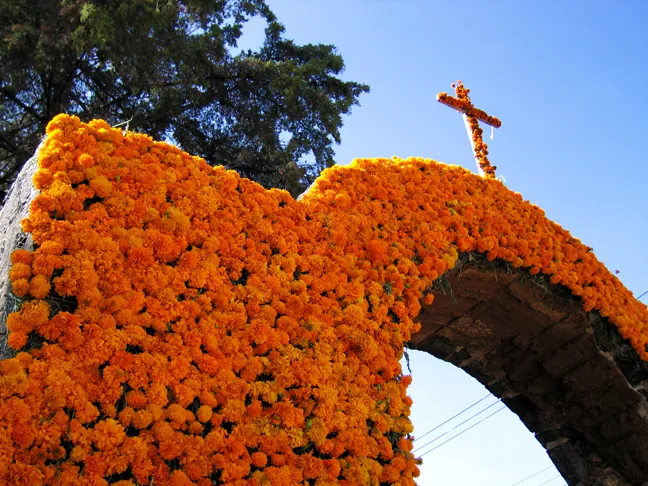
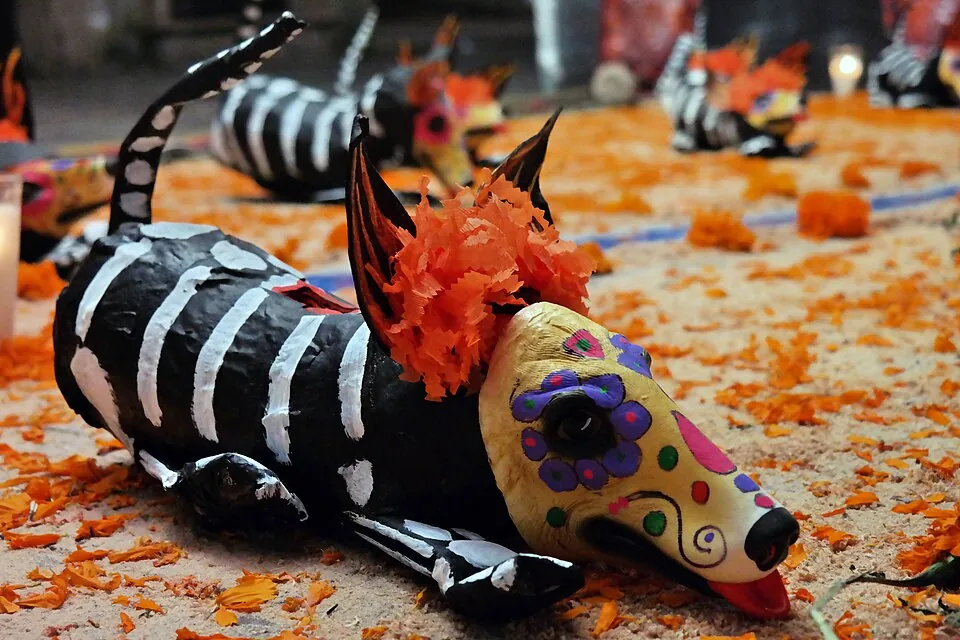
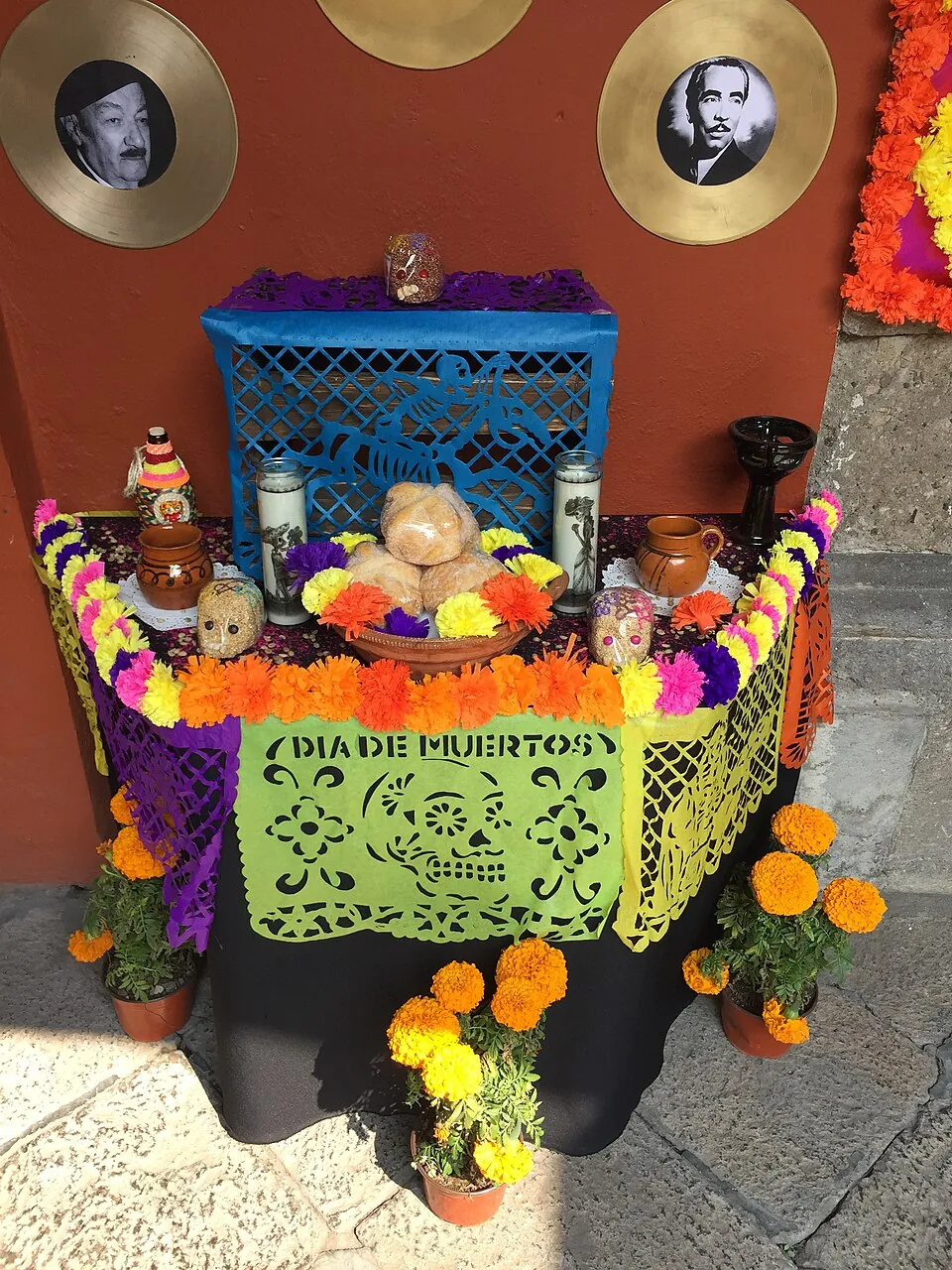
Mexico's Día de Muertos has become globally recognisable through marigolds, decorated skulls, elaborate altars, and a vigorous visual culture. Its popularity makes historical precision especially necessary. The celebration cannot be reduced either to “Mexican Halloween” or to one completely unchanged pre-Hispanic ceremony.
UNESCO's account of Indigenous festivities dedicated to the dead describes traditions in which families prepare flowers, candles, favourite foods, and pathways to welcome deceased relatives. It also explicitly recognises the meeting of pre-Hispanic religious practices with Catholic observances introduced after the Spanish conquest. Local customs differ, and a nationally familiar iconography should not erase that variety.
The dead in these observances are not merely anonymous frightening figures. They are particular people, remembered through the food they liked and the places they occupied. An altar can be a public or domestic work of memory, assembled from objects that would otherwise seem ordinary: a photograph, a glass of water, a plate, flowers, a familiar possession.
The resemblance to other festivals lies partly in the idea of hospitality across death. Its specific history, however, belongs to Mexico and to the communities that sustain and transform it. Comparisons are useful only when they preserve that distinction.
Cambodia: offerings and unsettled ancestors
In Cambodia, Pchum Ben illustrates another relationship between religious observance and the dead. During a period of fifteen days, families visit pagodas, make offerings, and dedicate merit in connection with deceased relatives. Buddhist monks play a central part in the ceremonies. Some traditional accounts particularly concern suffering or hungry spirits who may benefit from what living relatives do.
There is an important difference between preparing a place for a loved one's temporary homecoming and transferring merit through religious observance. Both may express a continuing duty to the dead, but they rest on different understandings of what the departed need.
Cambodia's more recent history gives the rites another dimension. At memorial places associated with the Khmer Rouge period, Pchum Ben observances can provide ways to mourn people whose remains or exact resting places are unknown. UNESCO documentation concerning Cambodian memorial sites describes ceremonies at places of mass death. Here the problem is not simply that a familiar grave has been neglected. It is that violence destroyed families and often denied survivors even the certainty of a burial place.
An annual ritual cannot undo such losses. It can, however, create a recognised time and place for obligations that grief alone cannot resolve.
What the comparisons reveal, and what they do not
Once several of these customs are placed side by side, recurring materials become visible. There are candles and lanterns; food, flowers, water, and incense; songs, prayers, and journeys. There are thresholds: the door, the grave, the bridge, the path between the household and the cemetery. Many observances make an otherwise abstract bond with the departed physically manageable. Someone can sweep the stone, prepare a favourite dish, or light the way.
These similarities do not demonstrate that all cultures are preserving fragments of a single lost religion. Fire is useful when darkness comes. Food is an obvious expression of care. Graves are places where the absent can be addressed. Human lives offer many reasons for comparable rituals to develop independently.
Nor should “ancestor worship” be applied indiscriminately. Honouring a dead parent, praying for a soul, asking an ancestor to intercede, dedicating Buddhist merit, and celebrating a saint are not interchangeable actions. Some traditions imagine the dead as visitors; some as persons in need; others as protectors, witnesses, or members of a continuing community. Within any one tradition, people may disagree about literal belief, inherited custom, and social obligation.
There is also a danger in treating religious change as either complete replacement or a tidy fusion. Christianisation, colonial rule, Buddhist transmission, migration, and modern commerce changed practices unevenly. Some were suppressed, some adapted, and some were invented or revived much later. A festival that looks ancient may contain recent elements. A custom that seems modern may preserve a remarkably old concern, even if its outward form has changed.
The historian's task is not to strip rituals of meaning by exposing their changes. It is to distinguish the histories we can establish from the stories people tell about those histories. The latter are also part of culture, but they are not the same kind of evidence.
The empty place at the table
Perhaps what joins these traditions most closely is neither belief in ghosts nor fear of death. It is the refusal to treat a person as irrelevant merely because that person is no longer alive.
The dead continue to occupy rooms in memory. They remain attached to recipes, songs, places, arguments, debts, jokes, and gestures learned so young that nobody remembers who taught them. The work of remembrance is partly an effort to give those attachments a public form. A date on the calendar assures us that others will understand why we have returned to the cemetery, set a candle in the window, or laid something on the table that nobody will touch.
Halloween, with its monsters and masks, sometimes approaches this question from the side of unease. For one evening, boundaries can be crossed. Ordinary identities are exchanged for strange ones, doors are opened to disguised visitors, and the night permits a controlled encounter with what we otherwise prefer to keep outside. Its older Irish and Christian layers help explain why the occasion remains associated with the dead even when it is celebrated chiefly for entertainment.
Undas, Obon, Día de Muertos, and Pchum Ben ask their own questions, in their own languages and religious worlds. Some welcome the departed. Some pray for them. Some feed, guide, or honour them. Their differences are too important to dissolve into a cheerful claim that everyone celebrates the same thing.
But they do reveal a recurring human difficulty. Death ends a life. It does not, by itself, tell the living what to do with the relationship that remains.
And so, from time to time, we make room.