Objects of Protection
Amulets, Talismans, and the Things We Trust to Keep Us Safe
A small object can carry a great deal of responsibility.
It may hang from a rear-view mirror, rest beneath a child's pillow, or disappear into the folds of a shirt. It might be a medal blessed by a priest, a paper charm received at a shrine, a bead shaped like an eye, or a scrap of writing folded so tightly that nobody but its maker remembers what is inside. A soldier might carry it into battle. A parent might attach it to a child's clothes. A traveller might touch it before leaving home.
The object itself may be quite ordinary. What makes it important is the relationship built around it: a blessing, a story, an inherited obligation, a promise of protection, or the memory of the person who gave it.
To call all such things magic is tempting, but not especially illuminating. Their meanings are not interchangeable. Some are understood as sacred signs. Others are thought to repel hostile intentions, recall ancestral powers, invoke divine protection, or simply remind their owners that they are not alone. Even within one tradition, official teaching and popular practice do not always say the same thing.
The interesting question is not merely whether these objects work. It is what people believe they are doing when they make, carry, bless, repair, inherit, or discard them.
Something to carry
Amulets are often described as objects intended to ward off harm; talismans, as objects expected to attract a desired benefit. These are useful working distinctions, but they are not strict categories that every culture recognizes. One object may promise safe childbirth, recovery from illness, courage, prosperity, and protection from jealousy at the same time. Its significance may depend less on its appearance than on the words spoken over it, the place where it was acquired, or the authority of the person who gave it.
The ancient Egyptians made protective objects from faience, stone, metal, and other materials. Their amulets might depict animals, deities, body parts, or signs associated with renewal. Some accompanied the living; others were placed with the dead. The heart scarab, in particular, belonged to ideas about judgment and the afterlife. It would be a mistake to treat all of these as decorative pendants with a vaguely mystical purpose. The objects occupied specific places within Egyptian understandings of the body, death, and the divine.
They also remind us that a small thing may be both practical and symbolic. A seal could leave its mark in clay and carry a protective significance. The difference between an instrument and an amulet was not always clear-cut.
Across societies, protection is rarely only a matter of an object possessing a design. There may be conditions: who may make it, what must be written, when a prayer is recited, whether it can be opened, how it should be worn, and what happens if it breaks. These procedures establish a chain of authority connecting the user with something larger than the individual.
The Filipino anting-anting
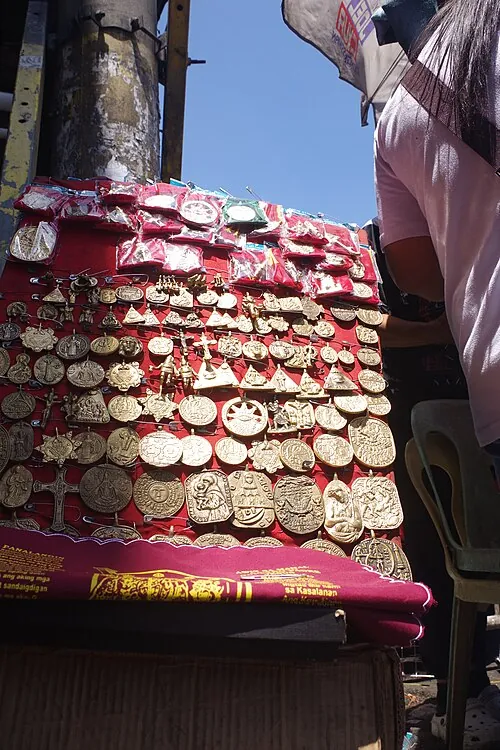
In the Philippines, the terms anting-anting and agimat encompass an unusually rich range of protective and empowering practices. The terms overlap in everyday usage, but they do not designate a single standardized article. Depending on locality, period, and practitioner, an object might contain writing, figures, religious names, diagrams, metal, cloth, or materials whose significance is not apparent to an outsider.
The Philippine history of protective objects is also inseparable from the country's religious history. Catholic prayers, the names of Jesus and Mary, saints, crosses, and other Christian signs have appeared alongside forms of ritual and belief that do not fit neatly within official Catholic teaching. This does not mean that every anting-anting is a survival of an intact precolonial religion, or that every Catholic element is a superficial disguise. Centuries of interaction have produced practices with histories of their own.
The connection between protective objects and conflict is particularly striking. In accounts of popular resistance and revolutionary movements, the anting-anting could figure in expectations of invulnerability, courage, or divine favour. Yet it would be irresponsible to imply that every revolutionary fighter depended on one, or that reports collected by colonial authorities offer an unfiltered account of the beliefs of the people under surveillance. Rene Escalante's work on the Cuerpo de Vigilancia materials is a useful reminder of both the value and the limitations of intelligence records concerning the Katipunan.
An amulet associated with resistance may also become an emblem of identity. Its reputation can survive after the emergency that gave it urgency has passed. Objects are copied, purchased, inherited, and reinterpreted. A sign once treated as potent in a tightly defined ritual setting may eventually be printed on a shirt or sold in a market, where some purchasers regard it as sacred, others as a cultural keepsake.
It is easy to mock the expectation that a piece of cloth or paper might resist a bullet. It is more useful to ask what danger, obligation, and hope meant to those who carried it. The historian need not endorse a claim of invulnerability to take its human and political importance seriously.
Medals, relics, and the distinction the Church makes
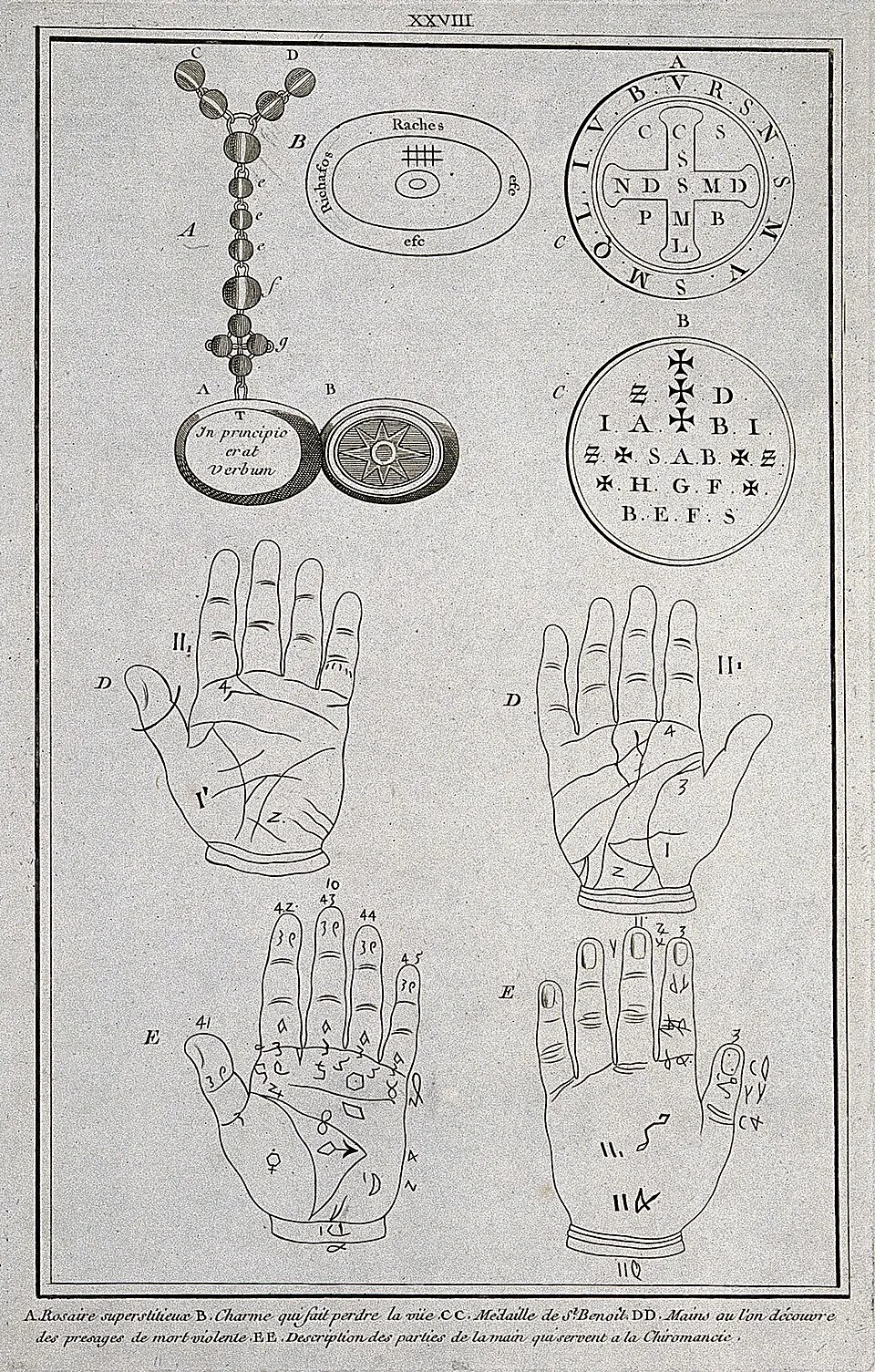
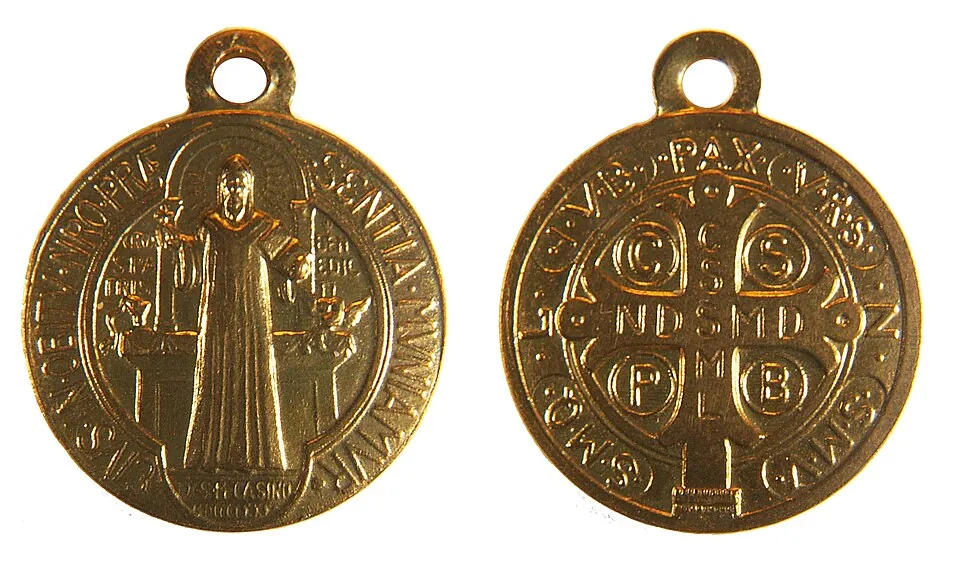
A Saint Benedict medal, a scapular, a rosary, a vial of holy water, or an image of the Santo Niño may also be carried into danger. The resemblance to other protective objects is visible enough. But Catholic theology makes an important distinction.
The Church describes sacramentals as sacred signs through which the faithful are disposed toward grace and the sanctification of ordinary life. In this account, an object's efficacy is not a mechanical force locked inside its material. Blessing, prayer, ecclesial intercession, and the disposition of the believer are central. The Catechism of the Catholic Church specifically cautions against treating an external action or sign as magically effective in itself (paragraphs 1667–1670 and 2111).
This is the doctrinal position. Lived religion can be more complicated.
A family may carefully keep a blessed medal near a sick relative's bed. Someone may give a scapular to a person entering military service or undertake a journey after sprinkling the vehicle with holy water. A statue may be carried through a neighbourhood, not because a figure of wood is regarded by doctrine as a separate divinity, but because an image gives devotion a material focus. Meanwhile, popular stories sometimes attach very specific protective promises to particular objects. Such stories should be described as beliefs held by practitioners, rather than confused with universally binding Church doctrine.
Relics and reliquaries introduce another distinction. A relic may be understood as the bodily remains of a saint or an object associated with a holy person. A reliquary houses and presents it for veneration. Catholic theology distinguishes veneration of saints and their relics from worship owed to God. Historically, however, the political prestige, economic value, and miraculous reputation of relics could be immense. Institutions competed for them. Pilgrims travelled to them. Their authenticity and provenance could become matters of dispute.
The Santo Niño's prominence in Philippine devotion offers a further reminder that an object's meaning is shaped by history and community. A devotional image is never just an isolated piece of carving. Processions, family altars, vows, gifts, and narratives of protection give it social life.
Protection, in these settings, is not necessarily a claim that illness, disaster, or death will never occur. A believer may understand it as help in enduring what cannot be prevented. Outsiders sometimes miss that distinction, just as believers themselves may differ in their expectations.
The Japanese objects that travel, and those that stay
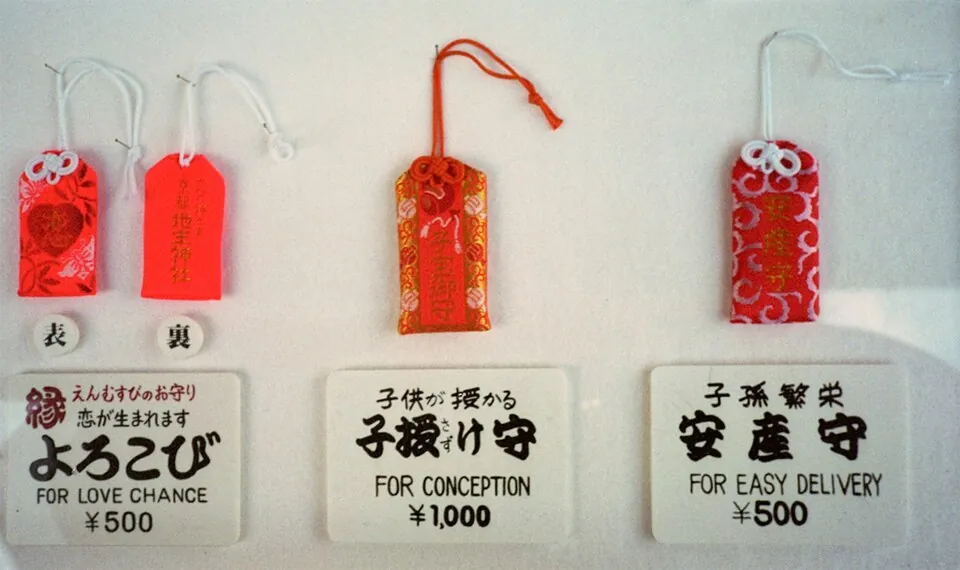
Japanese omamori are familiar to visitors at Shinto shrines and Buddhist temples: small protective packets associated with particular concerns, such as journeys, examinations, health, or general safety. Their specific forms and meanings vary by institution. A packet may contain a sacred inscription or other object not intended to be casually exposed. The fact that many omamori can be acquired at a shrine counter does not make them merely merchandise in the understanding of worshippers.
An ofuda is different, typically a paper or wooden talisman associated with a shrine or temple and often placed in the home or another designated location. One is commonly carried; the other commonly installed. That distinction is useful, although actual practices are more varied than any tourist guide can capture.
The making and receiving of these objects creates a continuing relationship with a religious institution. Some people return old charms for respectful disposal and receive new ones. Customs differ, and the widespread advice that every charm must be replaced on an exact annual schedule oversimplifies practice. Nor is it accurate to assume that every Japanese person holds identical religious convictions because such objects are common in public life.
Their presence in bags, homes, vehicles, and schools demonstrates something less spectacular and more interesting: ritual can accompany modern life without being experienced as its opposite. An examination charm and a carefully prepared study schedule can coexist. There is no necessary contradiction in the mind of the person carrying both.
The eye that watches the eye
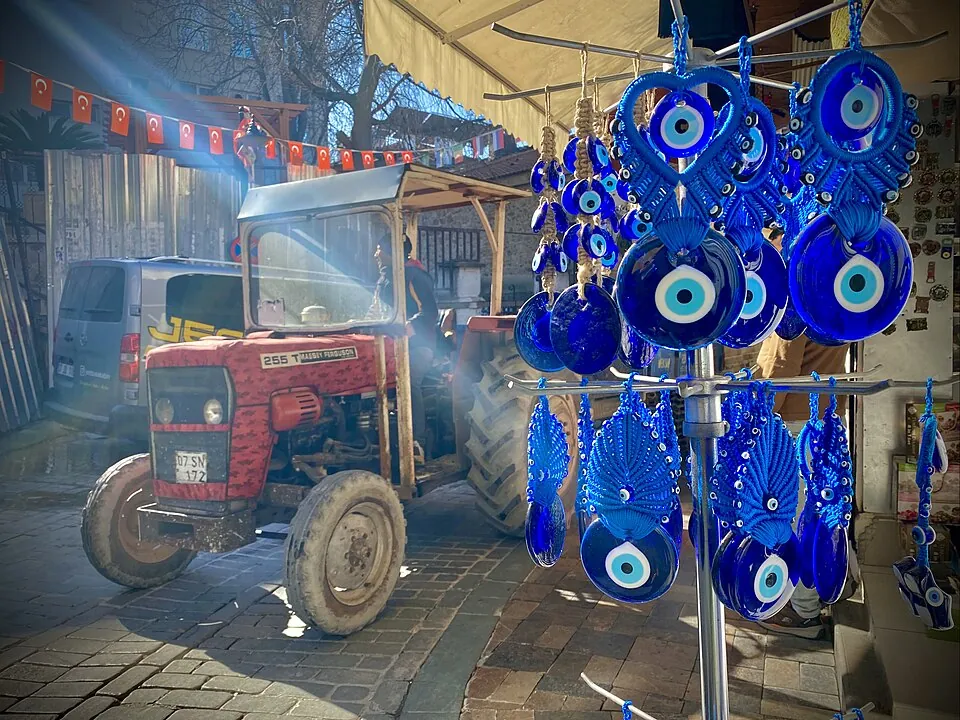
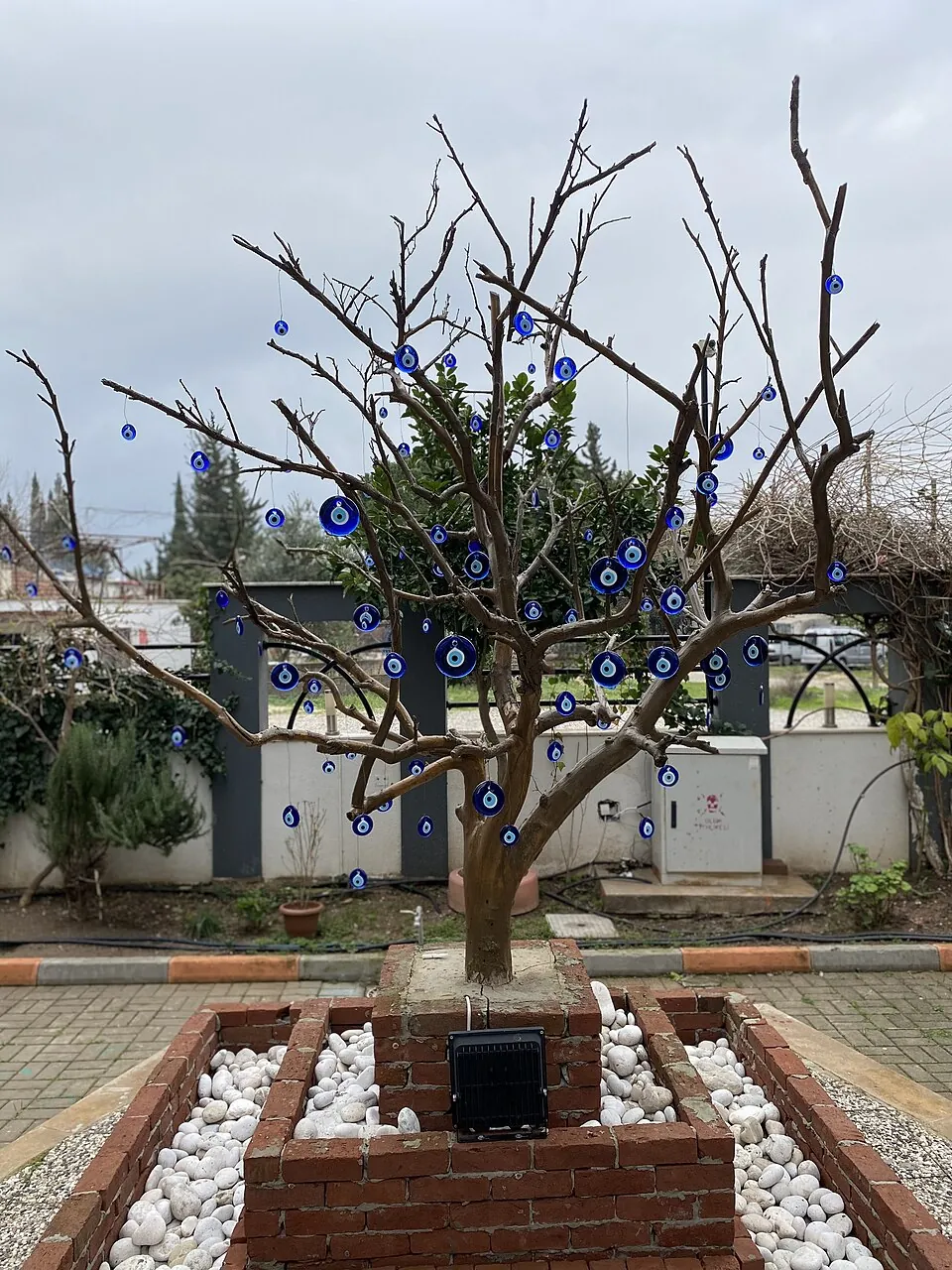
In Türkiye, the nazar boncuğu is a familiar glass bead, often blue and fashioned as an eye. Its protective significance relates to belief in the evil eye: harm arising through an envious or otherwise dangerous gaze. Such beliefs are not exclusively Turkish; related ideas are distributed across Mediterranean, Middle Eastern, and other societies, with different histories and terminology.
The bead is therefore not an eye that curses. It is commonly understood as an eye that counters the threatening look. It may hang in a vehicle, home, workplace, or on a child's clothing. Traditional manufacture is itself a craft with local lineages and economic importance. In parts of western Türkiye, artisans still make the beads by working molten glass.
There is a difference between describing a tradition's perceived protective purpose and declaring the object effective against an independently established force. A historian can do the first without pretending to have proved the second.
The symbol's enormous commercial circulation raises another issue. An object may pass from local religious or cultural practice into tourism, fashion, and international retail. It can become widely recognizable while the particular circumstances of its making fade from sight. Sometimes commodification supports craftworkers; sometimes it strips the object of the relationships that made it significant. Frequently it does both.
A web above the sleeping child
Dreamcatchers are now sold so widely that it is possible to encounter one without hearing any mention of the people from whose traditions they emerged. The webbed hoop is particularly associated with Ojibwe or Anishinaabe histories, including protective concern for children and dreams. Their transmission into broader Native American movements and then mass-market decorative culture is part of the modern story, not evidence that the design was always a universal Indigenous emblem.
An account of a dreamcatcher should begin with the community and tradition, rather than with a generic claim about what “Native Americans” believe. Cath Oberholtzer's study traces the objects' origins, variation, circulation, and commercialization. Those developments deserve the same historical attention as the objects themselves.
There is no need to imagine an unchanging, pristine object that became contaminated only when outsiders noticed it. Cultures borrow and adapt. But borrowing involves people and power. The difference between buying from an Indigenous maker and treating a sacred design as an anonymous graphic is not trivial. Attribution does not settle every question, but it can be the beginning of respect.
A helmet made of fear
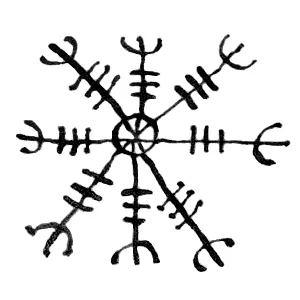
Few symbols reveal the hazards of careless chronology as well as the Icelandic Ægishjálmur, usually translated as the Helm of Awe or Helm of Terror.
The name has a genuine medieval literary history. In Fáfnismál, the dragon Fáfnir speaks of an ægishjálmr, associated with the terror he inspires. The famous later illustration, however, is another matter: an eight-armed, radiating figure familiar from tattoos, jewellery, and websites promoting “Viking protection runes.” The existence of a medieval name does not establish that Viking Age warriors wore or carved that precise geometric design.
Icelandic galdrastafir, or magical staves, are a diverse post-medieval manuscript tradition. Their forms and purposes varied, and their sources could draw on Christian prayers, learned European magic, local practice, ciphers, and older northern materials. Recent scholarship by Roberto Luigi Pagani argues that these staves should be understood partly through the transmission and adaptation of broader European esoteric traditions rather than as untouched remnants of pagan Scandinavia.
The Vegvísir, commonly described as a Viking compass, illustrates the problem even more sharply. It is attested in nineteenth-century Icelandic manuscripts, notably the Huld manuscript compiled in 1860. Its accompanying text concerns not losing one's way in bad weather or unfamiliar country. That makes it a fascinating later protective or guiding sign. It does not turn it into a documented Viking Age navigation instrument.
What about runes themselves? Runes were first and foremost letters used in writing systems across Germanic-speaking regions, though some inscriptions and texts also show ritual or magical uses. A runic alphabet is not a catalogue in which every letter has one timeless, standardized occult power. Nor does a stave become a rune merely because it looks angular.
The distinction is not pedantic. Icelandic magical manuscripts are interesting in their own right. To force every sign into a Viking Age origin impoverishes centuries of history in the pursuit of a more marketable antiquity.
A person today may choose an Ægishjálmur tattoo or wear a Vegvísir pendant as a modern expression of protection, identity, or personal meaning. The present significance is real as a social fact. Historical provenance is a different question, and it should be answered separately.
What a charm does when nothing happens
The promise of protection presents an awkward problem for interpretation. If danger passes without harm, the charm may receive the credit. If disaster occurs, a believer may explain the failure by improper use, lost blessing, a greater destiny, or a misunderstanding of what protection meant. These explanations cannot be tested in the same way as claims about the strength of a helmet or the efficacy of a vaccine.
Still, protective objects can have effects that do not require the supernatural claim to be resolved. A familiar object may steady someone in an unfamiliar setting. Receiving it may express affection or solidarity. Wearing it may signal membership in a community. Preparing or blessing it can transform fear into a deliberate act. None of this proves that every charm reduces anxiety, and one should not mistake a plausible psychological explanation for a universal law. Some objects can also become sources of dread, obligation, exploitation, or dependence.
An object passed down through a family may matter because it once belonged to a grandmother who survived a war. A small medal given before a departure may preserve the giver's concern long after the journey ends. These are not lesser meanings because they are human ones.
The material object gives form to a difficult proposition: that a person facing danger need not face it entirely alone. The power claimed for a charm may come from a god, a saint, an ancestor, a written sign, a trained ritual specialist, or the object itself. But even where those explanations differ radically, the act of carrying something makes vulnerability tangible.
That is why the same object can be treasured, doubted, lost, found, copied, sold, and given away without its story ending. A charm has a biography as well as a design.
We cannot determine the history of an object by assuming that everyone who held it believed the same thing. Nor can we do justice to it by placing every medal, stave, amulet, and talisman in a single cabinet labelled superstition.
People do not stop fearing danger simply because they understand it. They seek means to prepare for it, explain it, or endure it. Sometimes those means are practical tools. Sometimes they are prayers. Sometimes they are small things carried close to the body, entrusted with hopes much larger than themselves.